The Hidden Costs of Cable Disposal: What Demolition Operators Are Losing
“Just bin it” is sometimes the default. Cable comes off every commercial strip-out, decommission, or electrical fitout by the tonne, and most of it ends up in the general C&D skip or gets handed to a long-standing scrap merchant. Both may feel like a clean handover, but neither is. Binning cable costs demo operators money in four ways at once – most of them invisible until someone breaks the numbers down.
Start with the levy.
Victoria’s waste levy charges $169.79/tonne on industrial waste at metropolitan landfills for FY 2025–26, up from $132.76 the year before, and rose again to $177.19/tonne on 1 July 2026. Even where demo operators separate cable for a scrap merchant, the material caught up in general C&D skips (contaminated cable, offcuts, cable buried in demolition debris) still hits that industrial rate.
The skip company collects the levy and passes it through, which is why it never shows up on the operator’s books as a cable cost. Australia generated 29.2 million tonnes of construction and demolition waste in 2022–23 – 39% of all waste produced in the country.
Then there’s what the cable is actually worth.
LME copper is trading above AUD $19,300/tonne as of mid-2026, well above the January 2026 record of AUD $18,400/tonne, driven by clean energy demand, data centre expansion, and mine supply constraints – with export earnings forecast to grow from AUD $13B to $17.6B by 2026–27, the price isn’t easing any time soon. Australian scrap yards are paying $18,000/tonne for clean bright copper on bulk commercial contracts, with even insulated cable often fetching more than AUD $11,800/tonne.
Scrap merchants pay for the conductor metal only – the PVC sheathing and insulation get downgraded or landfilled, feeding into a national PVC recycling rate of just 2%. A scrap docket shows what the contractor was paid, not what the cable was worth.
The third cost lands later, on the next tender.
Green Star Buildings v1.1 requires 80% C&D waste diversion as a minimum, 90% for full credit – and head contractors chasing Green Star certification pass those targets down through subcontractor scope. Mandatory ESG reporting under AASB S2 started for the largest entities in January 2025 and reaches smaller entities in July 2027.
For a head contractor putting a tender together, missing diversion data from a contractor means either chasing it, working around it, or picking a different contractor next time.
The fourth cost is the paper trail that isn’t there.
A weighbridge docket from a scrap merchant is a receipt, not a chain-of-custody record. It doesn’t show recovery rate, downstream destination, or what happened to anything other than the copper. That’s the record Green Star auditors and head contractor prequalification teams increasingly want to see.
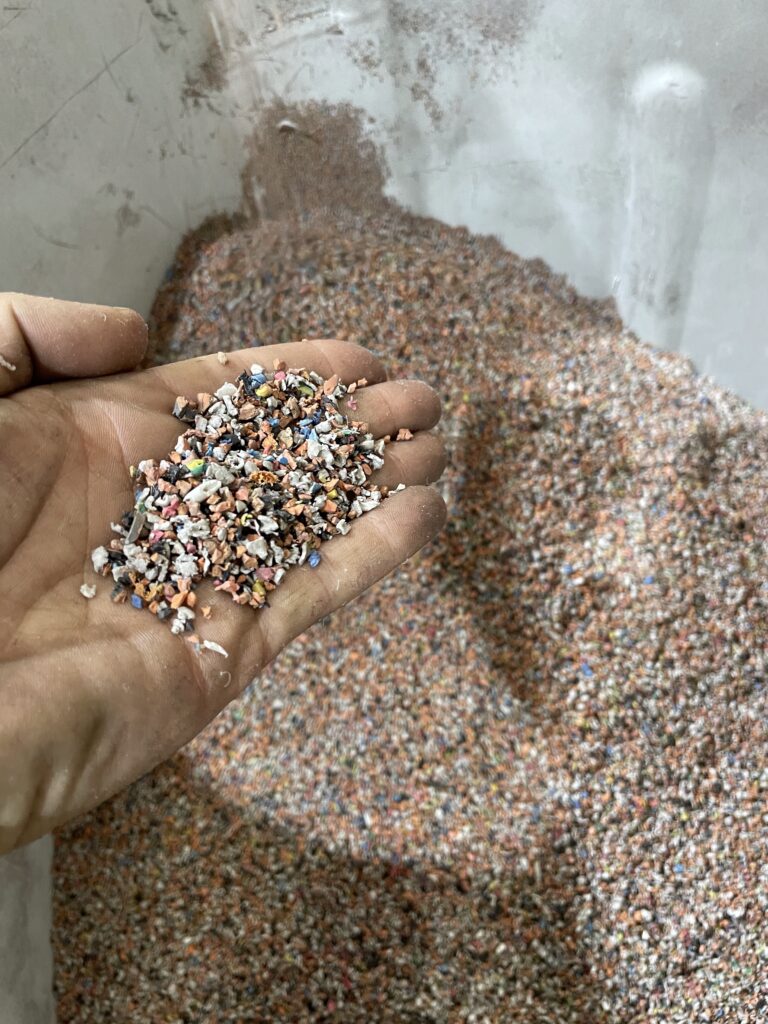
Same material, different pathway
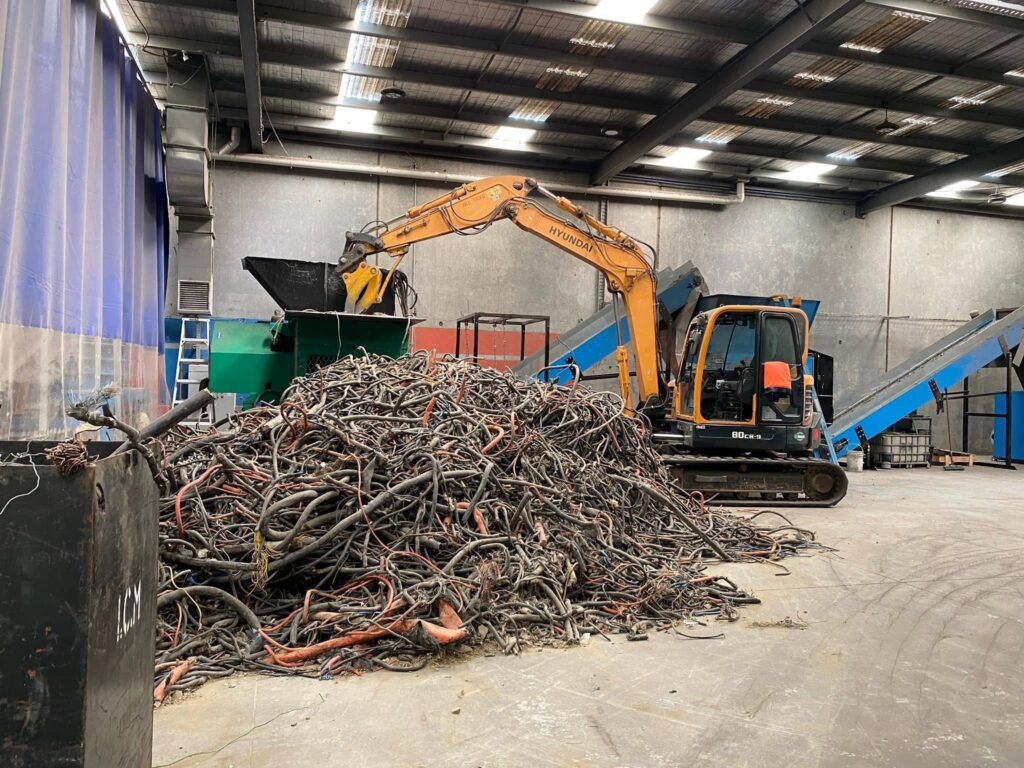
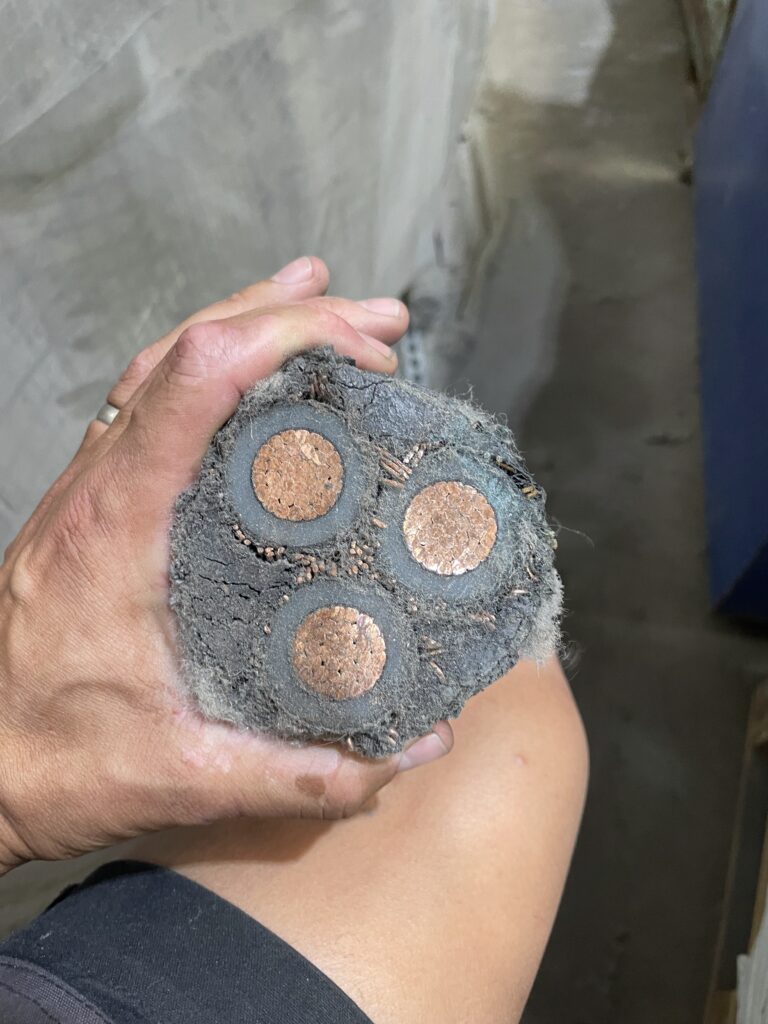
The alternative addresses all four. JR Hammer runs it end to end: free waste audits before commitment, bins supplied and collections scheduled, and up to 90% whole-cable recovery through advanced mechanical separation. That captures conductor metals and PVC together, not just the easy copper. Copper returns match the going market rate. Green certificates come with every pickup, built for Green Star reporting and AASB S2 disclosure.
Mixed, tangled, and contaminated cable is accepted – no stripping or sorting on site. R&D partnerships with CSIRO, RMIT, and the Vinyl Council of Australia (who recently awarded JR Hammer the 2025 PVC Stewardship Advancing Circularity Award) sit behind the process, and JR Hammer is working towards ISO 14001 certification. Scheduled pickup also keeps cable off site over weekends, reducing exposure to copper theft.
Cable binned in 2026 is a cost line on the current job and a scoring risk on the next one. JR Hammer processes the whole cable – all metals and polymer – and hands back the documentation to prove it.
Further reading
What Happens to Cables When 5G Rollout Meets End-of-Life 3G/4G Infrastructure?
What Happens to Your Cables When You ‘Recycle’ Them?
The Electrical Wholesaler Power Play: How Lecky’s and Middy’s Are Reshaping Contractor Behaviour
Case Study: How Proelec Turned Cable Waste into Winning Tenders
What Demolition Companies Should Be Asking When Contracting a Cable Recycler
Why Only 2% of Australia’s PVC Gets Recycled (And What We’re Doing About It)